Behind the Label Coffee
Nestor Lasso - Ombligon
Nestor Lasso - Ombligon
Couldn't load pickup availability
Flavour Profile - Cherry / Red Wine / Blood Orange
Region: Huila
Variety: Ombligon
Process: Natural
Producer: Nestor Lasso
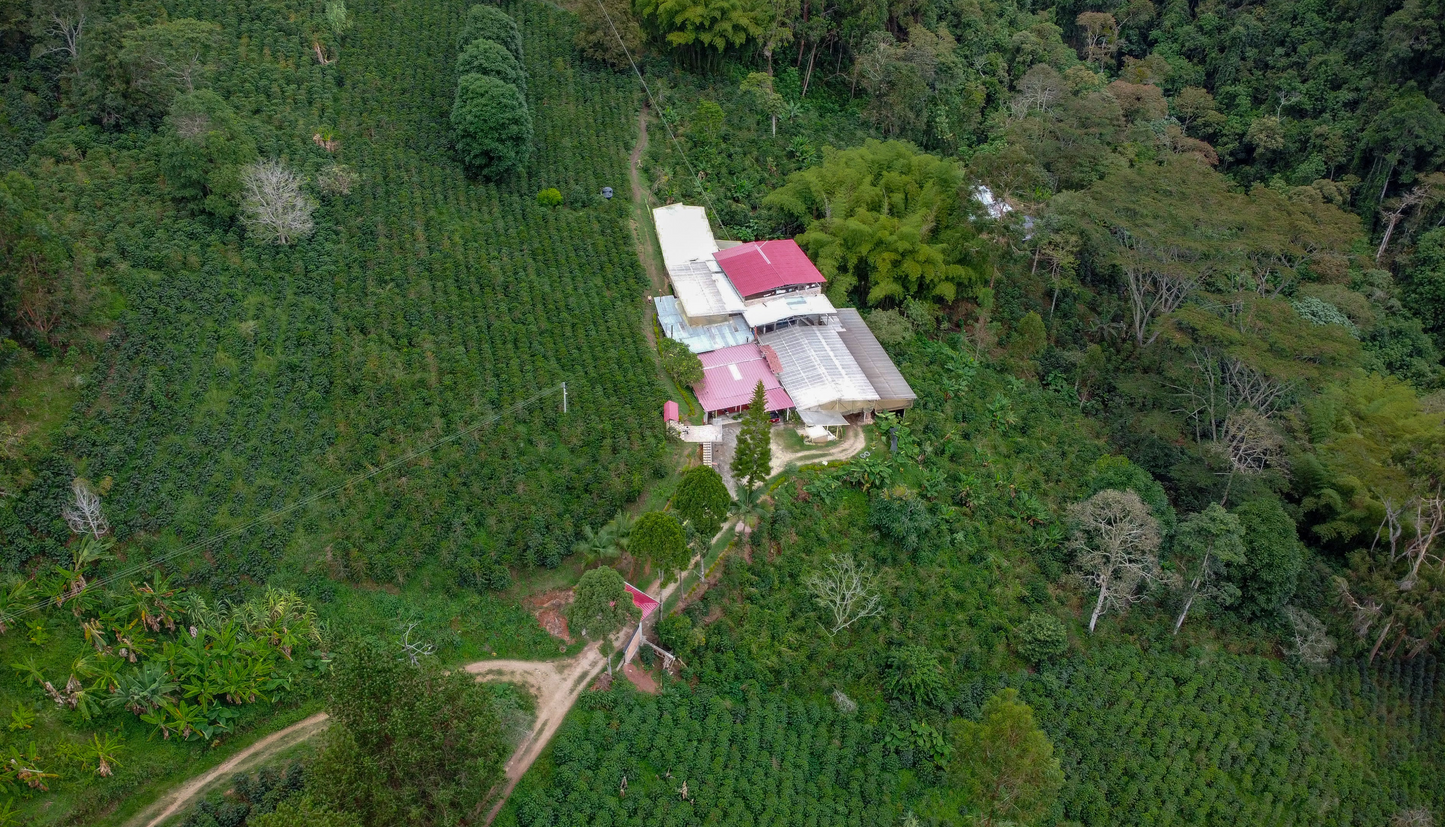
Coming from the same farm I used for my Irish Brewers Cup competition coffee, this lot from El Diviso showcases the level of innovation and precision that has made the farm one of the most exciting producers in modern coffee. While this is not the exact competition coffee, it carries the same philosophy and attention to detail that drew me to El Diviso in the first place — pushing flavour, fermentation, and quality to extraordinary levels.
Produced in Pitalito, Huila, by brothers Nestor and Adrian Lasso alongside Jhoan Vergara, El Diviso has become globally recognised for experimental processing methods and some of Colombia’s most expressive coffees. Sitting at around 1,800 metres above sea level, the farm combines ideal growing conditions with an obsessive approach to post-harvest processing that allows coffees like this to stand out on the world stage.
The variety, Ombligon, is incredibly rare and instantly recognisable due to the small “belly button” formation on the bean. Believed to either trace back to Ethiopian heirloom genetics or be a mutation of Pacamara, it is almost exclusively grown in Huila and is known for producing intensely fruit-forward and floral coffees with remarkable sweetness and texture.
Only fully ripe cherries measuring between 21–24 °Brix are selected before floatation sorting removes lower-density cherries and defects. Every detail matters at this stage because consistency in ripeness is essential for creating clarity and balance in such a complex process.
After washing, the cherries undergo a thermal shock rinse at approximately 50°C. This helps loosen the structure of the fruit and activates fermentation in a controlled way, laying the foundation for the explosive fruit character this coffee develops later in the process.
The coffee then enters a multi-stage fermentation designed to build depth, sweetness, and complexity. First comes an oxidation phase lasting around 48 hours in open tanks, where coffee must is regularly recirculated while pH and sugar levels are carefully monitored.
From there, the cherries are sealed in anaerobic tanks and inoculated with brewer’s yeast for a further 38–48 hours. This stage amplifies the coffee’s dense body, vibrant fruit notes, and layered sweetness. Some versions of the process even involve extended fermentation inside controlled bio-reactors where temperature, pressure, humidity, and circulation are tightly managed.
Drying is approached with the same precision as fermentation. The coffee is mechanically dried to reduce moisture, rested in dark bags for stabilisation, and then slowly finished under canopy drying conditions over approximately 15 days until reaching the ideal moisture content.
The final cup is intensely expressive, showcasing notes of strawberry, raspberry, sweet spice, clove, cardamom, and delicate florals. It is juicy, dense, and complex, with the kind of clarity and structure that demonstrates just how far modern coffee processing can go when producers are willing to innovate fearlessly.
Share